
Local SEO for Restaurants: How to Get More Diners Through Your Door
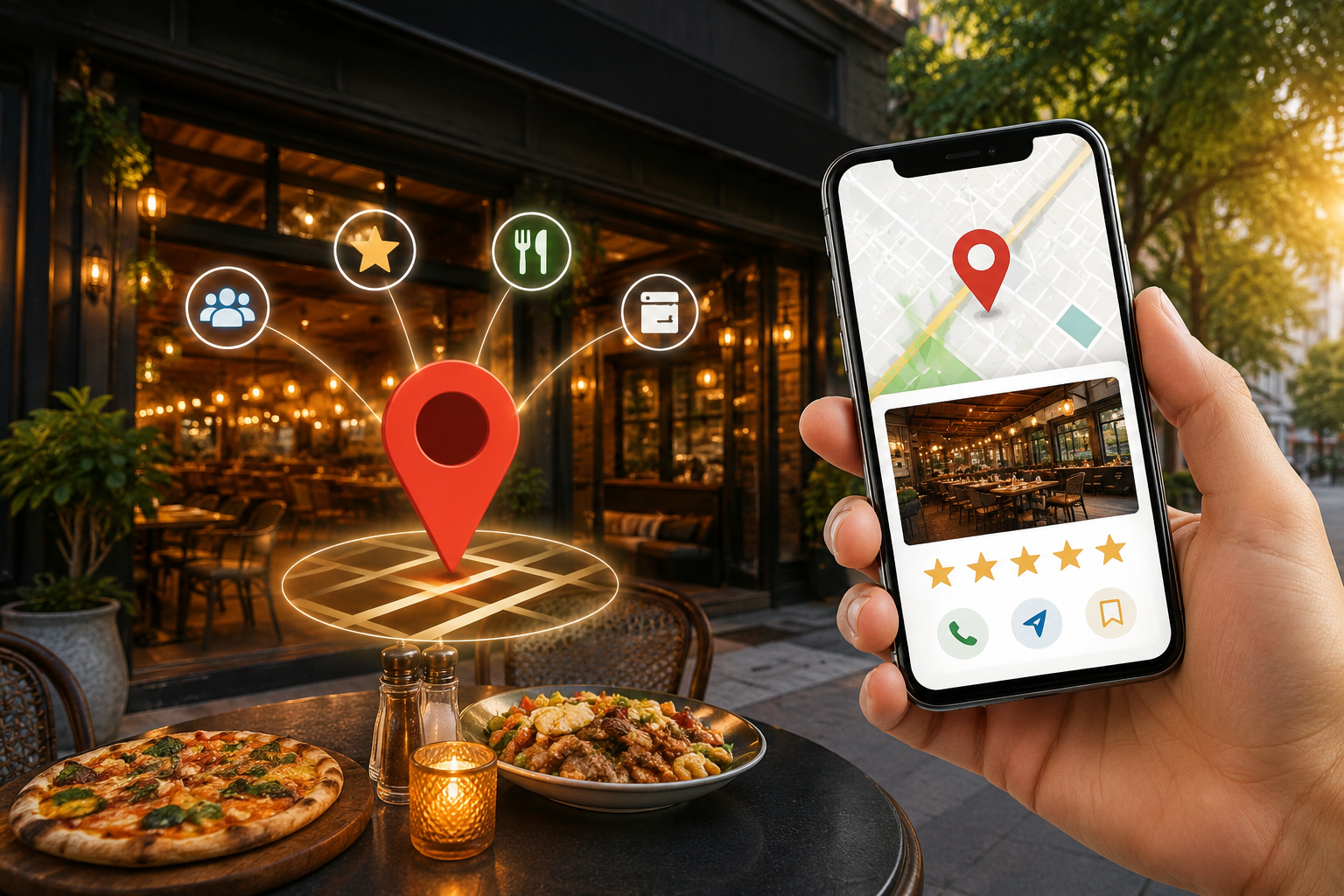
If you run a restaurant, here’s a statistic that matters: 8 out of 10 customers will choose their next meal online by 2025. And nearly 77% of people check a restaurant’s website or Google listing before they order or visit.
The question isn’t whether your restaurant needs to be found online — it’s whether you’re showing up when hungry customers are searching. In this post, we break down what actually works for restaurant local SEO in 2025 and 2026.
Why Local SEO Is Non-Negotiable for Restaurants
Restaurant searches are almost always local. When someone types “best biryani near me” or “Italian restaurant in Kochi”, they have intent — they want to eat, and they want to eat soon.
- 57% of full-service restaurants now accept online reservations via their website.
- 79% of restaurants struggled to attract new customers in 2024 — a problem local SEO directly solves.
- 68% of diners say they have tried a new restaurant because of positive online reviews.
The math is simple: if you’re not on page one of Google for local queries, you’re invisible to a massive pool of ready-to-order customers.
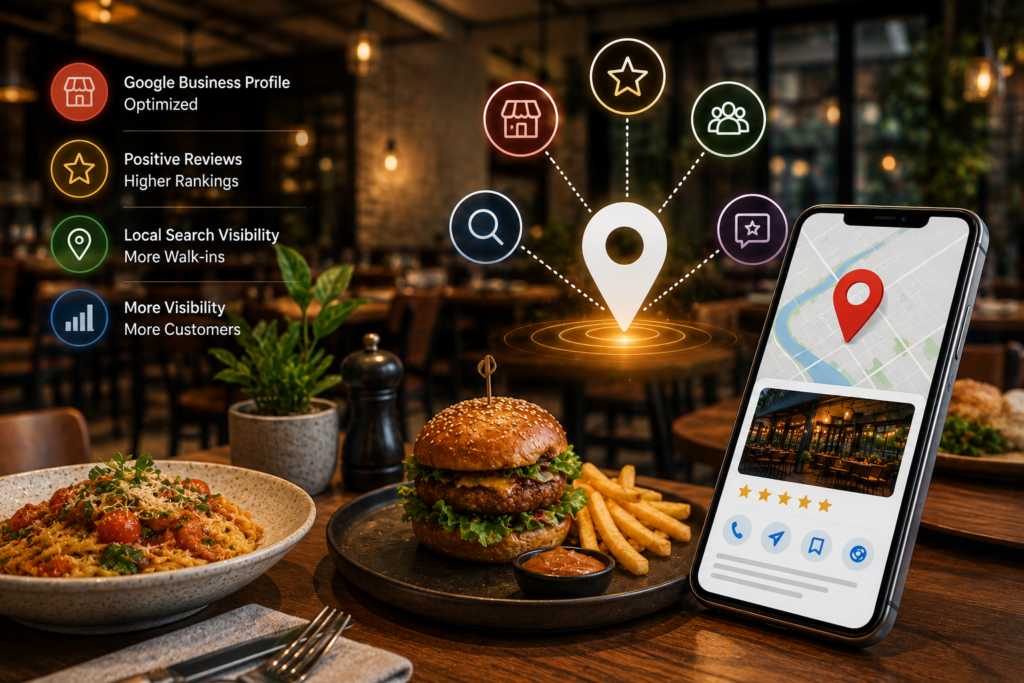
The 4-Part Local SEO Strategy for Restaurants
1. Optimise Your Google Business Profile
Your Google Business Profile (GBP) is the single most important local SEO asset you own. It’s what shows up in the local map pack, Google Maps, and knowledge panels.
What to do:
- Keep your name, address, and phone number (NAP) consistent across all platforms.
- Select the exact primary and secondary categories (e.g., “Indian Restaurant” + “South Indian” + “Takeaway”).
- Add high-quality photos of your dishes, interiors, and staff — listings with photos get 42% more requests for directions and 35% more click-throughs.
- Post weekly updates: special menus, live music nights, festive offers.
- Respond to every single review — positive and negative. Google factors review responsiveness into rankings.
Pro tip: Use Google’s “attributes” feature to highlight free WiFi, outdoor seating, vegetarian options, or wheelchair accessibility.
2. Build Local Citations and Consistent Listings
Your restaurant needs to be listed consistently across directories — Zomato, Swiggy, Justdial, TripAdvisor, Yelp, and local food blogs. Inconsistent NAP details confuse Google’s algorithm and hurt rankings.
Quick checklist:
- Claim and verify every listing
- Ensure the phone number, address, and hours are identical everywhere
- Add your website URL and menu link
A recent 2025 study of over 2,000 restaurant locations found that consistent local citations alone contributed to a +74% organic traffic increase over three months for top-performing groups.
3. Get More (and Better) Reviews
Reviews are a local SEO goldmine. They influence both ranking and customer decisions.
- Restaurants with 50+ reviews significantly outrank those with fewer.
- Reviews containing keywords like “paneer” or “seafood” help Google associate your restaurant with those searches.
- A steady flow of new reviews signals to Google that your restaurant is active and relevant.
How to get more reviews:
- Add a QR code on the bill that links directly to your Google review page.
- Train your staff to ask happy customers for a quick review.
- Never incentivise reviews — Google prohibits this and it can result in penalties.
4. Create Locally Relevant Content
A blog or news section on your restaurant’s website isn’t just for SEO — it’s how you tell your story and attract food lovers.
Content ideas that work:
- “The Story Behind Our Signature Kerala Beef Fry”
- “Best Time to Visit [Your Restaurant] for Quiet Dinners vs. Lively Evenings”
- “Our Chef’s Favourite Seasonal Ingredients This Monsoon”
Each post is an opportunity to rank for long-tail keywords like “authentic Kerala food in [city name]” or “best seafood restaurant near [landmark]”.
Common Mistakes Restaurants Make
| Mistake | Why It Hurts |
|---|---|
| Using a different address on Zomato vs. Google | Google’s algorithm flags inconsistency and drops rankings |
| Not posting to GBP for months | Google treats inactive profiles as less relevant |
| Ignoring negative reviews | Unanswered complaints look worse than the complaint itself |
| No menu on the website | Customers leave — 57% of diners say menu availability is a deciding factor |
The Bottom Line
Local SEO is not a one-time setup it’s an ongoing process that directly drives foot traffic, reservations, and takeaway orders. For restaurants, the ROI is undeniable: more visibility means more customers, and more customers means a fuller dining room every night.
At Luxelane Media, we build hyper-local marketing strategies for restaurants that go beyond basic SEO — from Instagram campaigns that showcase your dishes to Google Ads that capture high-intent diners. Whether you’re a single outlet or a growing chain, we can help you own your local market.

3 Comments
Lea Tomato
AI-generated art is impressive, but I feel like it takes away the human touch. Illustration is about personal expression, and no algorithm can truly replace that.
Patrick Pineapple
I get your point, Lea, but I think AI is more of a tool than a replacement. It speeds up workflows and helps artists experiment with new ideas they might not have considered before.
Mary Cucumber
As a designer, I\’ve started using AI in my work, and it\’s actually helped me focus more on creativity. It handles the repetitive tasks, so I can put more time into refining concepts and storytelling.